
Have us facilitate or speak at your meetings and events. We present, facilitate, and engage globally, in person and online, with diverse cultures and industries. We support you where and when you need us. We are comfortable engaging in boardrooms, event stages, and breakout sessions, even in amusement parks and on mountaintops. You’d be amazed where we have been…



Thank you to The Greater Midwest Chapter of the Professional Convention Management Association, the Association Forum, the team at McCormick Place & everyone who participated.
The Neuroscientific Architecture of Exhibition Engagement and Agile Strategy
Overview
The global exhibition and trade show industry stands at a critical inflection point. For decades, the dominant paradigm of event planning has been logistical: a focus on square footage, drayage, aisle width, and badge scanning. This industrial model, optimized for operational efficiency, is increasingly failing to deliver on the primary objective of the modern “experience economy”: meaningful, memorable, and transformative human engagement. As attendees become more discerning and their cognitive environments more saturated, the traditional “build it and they will come” approach, characterized by static backwalls, passive consumption, and transactional exchanges, is yielding diminishing returns. This webpost supports the strategic narrative of the “Beyond the Booth” presentation by Strategy Table at Association Forum on December 4th 2025, and provides a deeper analysis of the cognitive, neurobiological, and behavioral mechanisms that underpin successful exhibition design.
This article serves as the theoretical bedrock to deepen the industry’s understanding of why change is necessary and how it can be achieved through scientific rigor rather than aesthetic intuition. Drawing upon a vast array of interdisciplinary research, ranging from the synaptic plasticity of the hippocampus to the agile management methodologies of software engineering, we deconstruct the “Attendee Brain.” We identify the specific neural networks that govern attention, the chemical pathways that encode memory, and the social instincts that drive connection. Furthermore, we translate these high-level scientific insights into a practical, iterative framework for “Agile Experience Design,” advocating for a fundamental shift from monolithic, high-risk event planning to a culture of continuous, low-risk experimentation.
The analysis reveals that the “resistance to change” often lamented by organizers is not merely a cultural artifact but a biological imperative of the human brain’s energy-conserving systems. To overcome this, we must design interventions that specifically target the brain’s novelty-detection circuits, leverage the dopamine-driven reward prediction error mechanism, and foster the psychological safety required for social risk-taking. This webpost establishes that the future of the exhibition floor lies not in bigger budgets or flashier technology, but in a nuanced, evidence-based alignment with the biological hardware of human experience.
Listen to a Deep Dive on this Article:
Part 1: The Neurocognitive Landscape of the Exhibition Floor
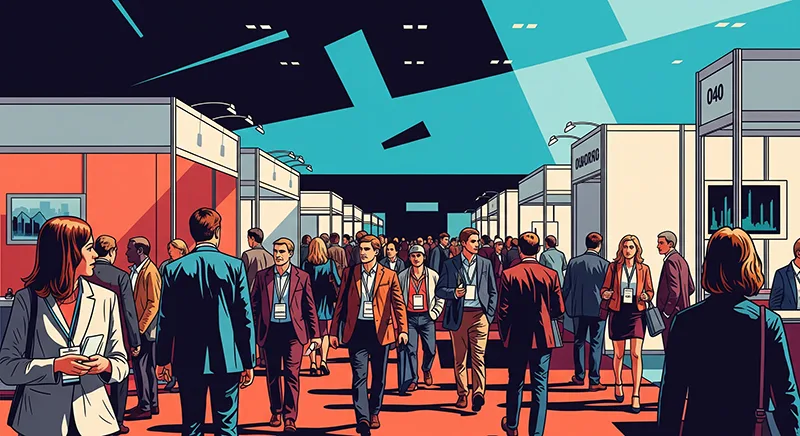
To design effectively for the trade show environment, we must first map the terrain of the human mind as it navigates a high-stimulus environment. The exhibition floor is a hostile cognitive environment; it is noisy, visually chaotic, and socially demanding. Understanding how the brain processes this chaos requires a granular examination of the neural systems that filter information, conserve energy, and ultimately decide what is worthy of conscious attention.
The Default Mode Network: The Neurobiology of the “Zombie Attendee”
One of the most pervasive challenges in exhibition design is the phenomenon of the “zombie attendee.” These are individuals who traverse the aisles with a glazed expression, adhering rigidly to the “carpet line,” avoiding eye contact with booth staff, and seemingly filtering out 90% of the visual stimuli surrounding them. While often dismissed as disinterest or fatigue, neuroscience identifies this behavior as a specific, identifiable neural state dominated by the Default Mode Network (DMN).
Anatomy and Function of the DMN
The DMN is a large-scale brain network primarily composed of the medial prefrontal cortex (mPFC), posterior cingulate cortex (PCC), precuneus, and angular gyrus. Historically referred to as the “task-negative” network, it was initially believed to be active only when the brain was “doing nothing.” However, recent research confirms that the DMN is highly active during specific internal cognitive processes: mind-wandering, self-referential thought, remembering the past (episodic memory retrieval), and envisioning the future (prospection).
Critically, the DMN operates in an antagonistic relationship with the Task-Positive Network (TPN), also known as the Executive Control Network (ECN). The ECN, anchored in the dorsolateral prefrontal cortex and parietal lobes, is recruited during goal-oriented, external attention tasks. When the ECN is engaged (e.g., focusing on a product demo), the DMN is suppressed. Conversely, when the external environment lacks sufficient salience or challenge, the brain conserves metabolic energy by defaulting to the DMN.
The DMN in the Exhibition Context
In the context of a trade show, an attendee walking the floor without a specific, urgent “hunt” mission often defaults to the DMN. They are physically navigating the space, but their mental resources are directed inward, processing their own narrative, worrying about unread emails, or rehearsing future conversations. This state is characterized by “cognitive ease” and a profound resistance to new external input.
The “zombie walk” is a protective mechanism. The brain, consuming 20% of the body’s energy despite representing only 2% of its mass, constantly seeks homeostasis. Navigating a crowded hall requires significant processing power; to manage this, the brain relegates navigation to automatic heuristics (System 1) and retreats into the DMN. For an exhibitor, the challenge is not merely to “attract attention” but to trigger a neural network switch, providing a stimulus sufficiently novel or relevant to suppress the DMN and activate the ECN. Without this switch, the attendee literally does not “see” the booth; it is filtered out before reaching conscious awareness.
| Neural Network | Anatomical Components | Cognitive Function | Observational Correlate (Attendee Behavior) | Trigger for Activation |
| Default Mode Network (DMN) | Medial Prefrontal Cortex (mPFC), Posterior Cingulate Cortex (PCC), Precuneus, Angular Gyrus | Self-referential thought, mind-wandering, internal narrative, energy conservation. | Low cognitive load, familiarity, fatigue, and lack of salient external goals. | High-salience stimuli, novelty, cognitive challenge, and specific task demands. |
| Executive Control Network (ECN) | Dorsolateral Prefrontal Cortex (dlPFC), Posterior Parietal Cortex | Stopping at a booth, reading detailed signage, engaging in a demo, and asking specific questions. | Walking the main aisles, avoiding eye contact, passive scanning, and checking phones. | The moment of “head turn” or pausing, the transition from passive to active. |
| Salience Network | Anterior Insula, Anterior Cingulate Cortex | Detecting behaviorally relevant stimuli; switching between DMN and ECN. | The moment of “head turn” or pausing; the transition from passive to active. | Unexpected sensory input (noise, light, motion), emotional triggers. |
Neural Network Dynamics in Exhibition Environments
Dual Process Theory: System 1 and System 2 in the Aisle
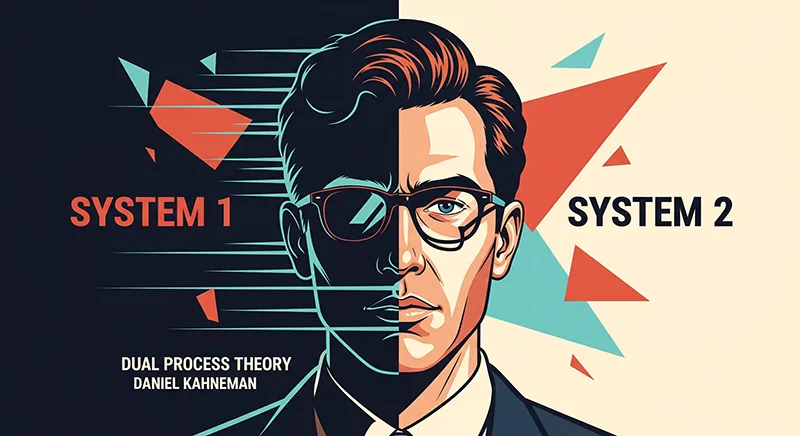
Complementing the network-level view is the Dual Process Theory of cognition, popularized by Nobel laureate Daniel Kahneman. This framework divides mental operations into System 1 and System 2, providing a robust model for understanding how attendees make split-second decisions about which booths to visit.
System 1: The Automatic Pilot
System 1 is fast, automatic, intuitive, and emotional. It operates with little or no effort and no sense of voluntary control. It relies on deep-seated heuristics, biases, and past patterns to navigate the world efficiently. On the trade show floor, System 1 is the dominant driver of behavior. It handles the physical navigation of the crowd, the automatic filtering of “irrelevant” visual noise, and the instinctual avoidance of aggressive salespeople.
System 1 is driven by cognitive ease. If a booth’s value proposition is not immediately intelligible (e.g., “We leverage synergistic paradigms”), System 1 classifies it as “too much work” and directs the feet to keep moving. System 1 is also the domain of the Loyalty Stage in consumer behavior; attendees will gravitate toward familiar brands (e.g., the “Starbucks” of their industry) because familiarity breeds cognitive ease.
System 2: The Lazy Controller
System 2 is slow, deliberate, and analytical. It allocates attention to effortful mental activities, such as comparing technical specifications, calculating ROI, or understanding a complex new workflow. Crucially, System 2 is “lazy.” The brain resists engaging System 2 unless absolutely necessary because it consumes significant glucose and causes cognitive fatigue.
The Design Disconnect
A fundamental failure in modern exhibition design is the mismatch between the designer’s intent (System 2) and the attendee’s state (System 1). Exhibitors often design for System 2, creating text-heavy graphics, complex technical diagrams, and 15-minute demonstrations. They assume the attendee is a rational information-seeker. However, the attendee approaches the booth in System 1. If the initial “hook” does not appeal to System 1’s desire for safety, novelty, or emotion, the attendee will never engage System 2 to process the deeper content.
Effective design must function as a “System 1 Trap.” It must use visceral, sensory, and emotional cues to arrest the attendee’s automatic progress, thereby buying the time and attention required to wake up System 2 for a deeper conversation. This aligns with research suggesting that marketing messages that appeal to emotions (System 1) lead to faster conversions, while detailed information (System 2) supports the final justification.

The Neurochemistry of Engagement: Dopamine as the Currency of Attention
If the DMN and System 1 represent the structural barriers to engagement, dopamine is the chemical currency required to pay the toll. Contrary to its popular characterization as a “pleasure molecule,” neuroscientific consensus defines dopamine as the neurotransmitter of motivational salience, anticipation, and learning. It is the signal that tells the brain, “Pay attention, this is important.”
The Reward Prediction Error (RPE) Mechanism
The primary mechanism by which dopamine drives learning and attention is the Reward Prediction Error (RPE). The brain is essentially a prediction engine; it constantly generates internal models of what will happen next based on memory and context.
Baseline Prediction: When an attendee walks past a row of standard 10×10 booths, their brain predicts: “Backwall, table, carpet, salesperson.” If reality matches this prediction, the prediction error is zero. No dopamine is released. No learning occurs. The memory is not encoded because it is redundant.
- Positive Prediction Error (+RPE): When an outcome is better or more interesting than expected (e.g., a booth with a live performance, a hologram, or an unexpected gift), midbrain dopamine neurons in the Ventral Tegmental Area (VTA) and Substantia Nigra fire a burst of dopamine. This phasic release serves as a “teaching signal,” triggering neuroplasticity in the hippocampus and striatum to update the brain’s model of the world.
- Negative Prediction Error (-RPE): When an outcome is worse than expected (e.g., a rude staffer, a broken demo), dopamine firing dips below baseline. This signals the brain to devalue that stimulus and avoid it in the future.
- For exhibition designers, the implication is profound: Sameness is the enemy of memory. To design for change, one must essentially design for Positive Prediction Error. We must engineer “Spike Moments”, experiences that violate the standard trade show script and trigger a dopaminergic response.
Novelty and the Hippocampal-VTA Loop
Novelty is the most reliable trigger for RPE. The hippocampus, responsible for encoding episodic memory, acts as a comparator. It constantly checks incoming sensory data against stored schemas. When it detects a mismatch (novelty), it signals the VTA to release dopamine.
Research distinguishes between two types of novelty, both relevant to exhibitions:
- Common Novelty: A new configuration of familiar elements (e.g., a new product version). This activates the VTA and promotes semantic memory (facts and concepts) via systems consolidation.
- Distinct Novelty: A completely unexpected experience that bears minimal relationship to the past (e.g., a rain room in a tech conference). This activates the Locus Coeruleus (LC), triggering the release of norepinephrine and dopamine in the hippocampus. This “synaptic tagging” creates strong, vivid episodic memories (memories of specific events).
To create a lasting brand impression, exhibitors must leverage Distinct Novelty to anchor the memory, while using Common Novelty to convey product information.

Cognitive Load Theory: The Bandwidth Problem
The trade show floor creates a “cognitive bottleneck.” Working memory is finite; it can only hold a limited number of “chunks” of information at once.
- Intrinsic Load: The inherent complexity of the material being presented (e.g., the mechanism of a new pharmaceutical). This cannot be reduced without dumbing down the content.
- Extraneous Load: The mental effort imposed by the way the information is presented. Cluttered graphics, illegible fonts, confusing layouts, and ambient noise all contribute to extraneous load.
When the total cognitive load (Intrinsic + Extraneous) exceeds the attendee’s working memory capacity, the result is cognitive overload. The brain responds by “shedding load”; it stops processing new information and retreats to the safety of the DMN. This is why “busy” booths often repel visitors.
The Design Imperative: To maximize the transmission of Intrinsic Load (the product message), designers must ruthlessly eliminate Extraneous Load. This aligns with the principle of “processing fluency”, the ease with which information is processed. High processing fluency (achieved through clear hierarchy, negative space, and familiar prototypes) creates a positive affective response (System 1 likes ease) and encourages approach behavior.
Psychological Safety: The Social Gatekeeper
Finally, we must address the “social brain.” Humans are hypersensitive to social threat. In an exhibition context, the “threat” is rarely physical; it is the threat of social embarrassment, rejection, or entrapment.
The Amygdala and Social Risk
The amygdala, the brain’s threat detection center, constantly scans the environment for danger. An aggressive salesperson, a confusing booth layout that makes one feel foolish, or a “trapped” physical space can activate the amygdala. When the amygdala is highly active, it inhibits the prefrontal cortex (the center of logic and learning). This is the “Amygdala Hijack.” In this state, an attendee cannot learn or engage authentically; they are biologically primed for “flight”.
Psychological Safety as a Prerequisite for Engagement
Psychological Safety is the belief that one will not be punished or humiliated for speaking up, asking questions, or making mistakes. In a trade show, this translates to the attendee feeling safe to browse without being pounced on, safe to ask “stupid” questions, and safe to leave the booth at will.
Research in organizational psychology shows that psychological safety is the single most important factor for team performance and learning behaviors. Similarly, in an exhibition, it is the prerequisite for “Discovery Mode.” Without a sense of safety, the attendee remains in a defensive posture, blocking any attempt at meaningful connection.

Part 2: Strategic Frameworks for Transformation
Understanding the neuroscience of the attendee is the diagnostic step. The therapeutic step requires a new strategic framework for executing these insights. The traditional “Waterfall” model of event planning, linear, rigid, and monolithic, is ill-suited for the dynamic, human-centric complexity of the modern exhibition. We must pivot toward Agile Experience Design.
From Waterfall to Agile: A Paradigm Shift
The “Waterfall” model assumes that we can perfectly predict attendee behavior months in advance. It involves massive upfront planning, a single “big bang” execution, and a post-mortem analysis when it is too late to change anything. This approach is high-risk; if the core hypothesis about attendee engagement is wrong, the entire budget is wasted.
Agile Experience Design, adapted from software development, prioritizes iteration, flexibility, and responsiveness to change.
- Iterative Cycles: Instead of betting everything on one final design, Agile advocates for “sprints”, short cycles of design, testing, and refinement. In an exhibition context, this might look like testing a booth layout in a warehouse with mock attendees, or running a “pilot” activation at a smaller regional show before rolling it out at the main global event.
- Responding to Change: Agile values “responding to change over following a plan”. This requires a culture shift where onsite teams are empowered to pivot. If a demo station is creating a bottleneck on Day 1, an Agile team changes the layout for Day 2. They treat the event not as a static performance, but as a living laboratory.
- User Stories: Agile replaces “requirements lists” with “User Stories” (e.g., “As an attendee, I want to quickly understand what this machine does so I don’t feel stupid”). This centers the design process on human needs rather than technical features.

The Strategy Table Pathways Methodology
The “Strategy Table” approach operationalizes these concepts into our three-phase consulting model designed to foster transformation.
Phase 1: Analysis and Discovery (Facilitation)
This phase addresses the “Solutioneering” trap, jumping to design before diagnosing the problem. It utilizes expert facilitation to uncover the cognitive and behavioral realities of the current state.
- Diagnostic Facilitation: Using skilled facilitators to move beyond surface-level logistics and identify the “cognitive friction” in the current attendee journey. This involves asking “Why?” until the root cause (e.g., fear of failure, lack of psychological safety) is revealed.
- Empathy Mapping: Operationalizing empathy to understand the attendees’ “pains and gains.” This aligns with the neuroscience of “Theory of Mind,” activating the brain’s social processing networks to anticipate attendees’ needs.
Phase 2: Strategic Design & Collaboration
This phase translates insights into experience principles.
- Co-Creation: Moving from “presenting to” stakeholders to “designing with” them. This leverages the Ikea Effect, a cognitive bias where people place disproportionately high value on products they partially created. By involving diverse stakeholders in the design process, Strategy Table ensures internal buy-in and reduces resistance to change.
- Design Principles: Establishing heuristics that guide decision-making, such as “Design for Discovery” (maximizing +RPE) or “Design for Safety” (minimizing amygdala activation).
Phase 3: Action and Implementation (The “Small Experiment”)
This is the execution phase, defined by the “Small Experiment” framework.
- The Small Experiment: A low-fidelity, low-cost intervention designed to test a specific behavioral hypothesis. Unlike a massive rebrand or redesign, a small experiment (e.g., “Let’s try removing the carpet and replacing it with vinyl maps” or “let’s set up a playful station”) is a low-risk yet high-impact opportunity for learning.
- Data-Driven Iteration: Moving beyond vanity metrics (badge scans) to behavioral metrics (dwell time, interaction depth, emotional sentiment). This data feeds back into the next design cycle, creating a continuous improvement loop.

The IPOP Framework: Balancing the Experience
To ensure a holistic appeal, we can integrate the IPOP framework (Ideas, People, Objects, Physical), developed by Smithsonian scientists, to categorize visitor preferences.
- Ideas (Conceptual): Appeals to the System 2 thinker who craves data, white papers, and technical specs.
- People (Social): Appeals to the socially motivated attendee, driven by mirror neurons and connection.
- Objects (Aesthetic): Appeals to the visual learner who responds to beauty, form, and novelty.
- Physical (Somatic): Appeals to the kinesthetic learner who needs to touch, move, and interact.
A successful “Agile” booth is not a monolith; it is a balanced ecosystem that offers entry points for all four IPOP dimensions, ensuring that no attendee’s brain is left unengaged.
Some Fast Examples:
1. Ideas (Conceptual)
- Target Audience: The data-driven System 2 thinker who wants substance and technical specs.
- Engagement Strategies:
- White Papers & Case Studies: Provide in-depth, downloadable documents that outline engaging trends, research, and technical developments.
- Expert-Led Webinars: Host sessions focused on deep dives into specific functionalities, data analytics, and future-proofing strategies.
- Interactive Data Visualizations: Offer tools or dashboards that let users engage with data sets related to a product or topic.
- Detailed Documentation: Ensure all technical documentation is easily accessible and comprehensive.
2. People (Social)
- Target Audience: The socially motivated individual driven by connection and community.
- Engagement Strategies:
- Live Q&A Sessions & Panels: Facilitate direct interaction between experts, community leaders, and attendees.
- Networking Events: Organize dedicated virtual or in-person mixers, Networking spaces, breakout rooms, or “Birds of a Feather” sessions to foster peer-to-peer connections.
- User-Generated Content (UGC) Showcases: Highlight success stories and testimonials from existing community members.
- Community Forums/Groups: Provide a platform for ongoing discussion, mentorship, and collaboration.
3. Objects (Aesthetic)
- Target Audience: The visual learner who responds to beauty, form, and novelty.
- Engagement Strategies:
- High-Quality Design Assets: Use visually stunning presentations, infographics, and professional-grade video content.
- Interactive 3D Models/Virtual Showrooms: Allow users to explore products or concepts in a rich, aesthetically pleasing digital environment.
- “Gallery” or Lookbook: Showcase the physical form, design evolution, and application examples through curated visual galleries.
- Augmented Reality (AR) Experiences: Offer a way to virtually place or interact with the object in their own space.
4. Physical (Somatic)
- Target Audience: The kinesthetic learner who needs to touch, move, and interact.
- Engagement Strategies:
- Hands-on Workshops: Design sessions where attendees are actively building, prototyping, or using a tool in real-time.
- Interactive Simulations/Gamification: Create scenarios where users must physically click, drag, or navigate through a process to achieve a goal.
- Physical Product Samples/Kits: Send tangible kits or trial products to users in advance for a tactile experience during the presentation.
- Movement-Based Activities: For in-person events, incorporate elements that require attendees to move between stations or participate in physical demonstrations.
Part 3: Designing for Change – The Toolkit
Translating neuroscience into physical reality requires specific, tactical interventions. This section outlines the “How” of the Strategy Table approach, categorizing interventions by the neural mechanism they target.
Designing for Attention: Disrupting the Default Mode
To break the DMN loop, we must use Pattern Interrupts that trigger the brain’s Salience Network.
Visual Disruption and “The Spike”
The brain ignores the expected. If every booth in the aisle has a standard backwall and a reception counter, the brain predicts this pattern and filters it out to conserve energy (habituation).
- Tactic: Visual Disruption. Create a design that violates the “booth schema.” A booth with no backwall, a ceiling-hung installation that lowers the perceived ceiling height, or a monolithic object placed in the aisle (if permitted) creates an Experience Expectation Disruptor. This forces the brain to switch from DMN to TPN to resolve the discrepancy.
- Mechanism: The “Spike Moment.” Anthony Vade describes this as an emotional peak that breaks the pattern. Biologically, this is a surge of norepinephrine (alertness) followed by dopamine (interest).

Spatial Curiosity and the “Information Gap”
Curiosity is the desire to close an information gap.
- Tactic: Porous Barriers. Instead of a wide-open booth (which can feel like a stage, increasing social risk) or a closed booth (which blocks view), use semi-transparent screens, slats, or “peek-a-boo” cutouts.
- Mechanism: This triggers Epistemic Curiosity. The brain sees only partial information and is compelled to fill in the space to complete the picture (Gestalt closure). This activates the dopaminergic seeking system, pulling the attendee in via internal motivation rather than external coercion.
Motion and the Orienting Reflex
The peripheral vision is highly sensitive to motion, an evolutionary adaptation for threat detection.
- Tactic: Kinetic Elements. Use moving light, projection mapping, or kinetic sculptures.
- Mechanism: This triggers the Orienting Response (or Reflex), an automatic shift of attention that physically turns the head and eyes toward the stimulus. This is a “bottom-up” attention capture that bypasses conscious filtering.

Designing for Memory: Engineering the Peak-End
Memory is not a continuous recording; it is a reconstruction of highlights. The Peak-End Rule dictates that people judge an experience primarily based on how they felt at its peak (most intense point) and at its end, largely ignoring the duration.
Multisensory Encoding (Dual Coding)
- Tactic: Haptic Engagement. Don’t just show; let them touch. Use weight, texture, and temperature.
- Mechanism: Dual Coding Theory suggests that information encoded through multiple sensory channels (e.g., visual + haptic) creates stronger memory traces. The somatosensory cortex (touch) has rich connections to the hippocampus. Handling a heavy object, for instance, subconsciously conveys “gravitas” and importance.
Emotional Tagging
- Tactic: Surprise and Delight. A sudden moment of humor, a personalized gift, or a moment of awe.
- Mechanism: The amygdala “tags” memories that have high emotional valence. This tag signals to the hippocampus that the specific event is biologically significant and should be consolidated into long-term memory (LTP).
The Zeigarnik Effect (See a Field Guide to Brain Glitches for more on this)
- Tactic: The Cliffhanger. Don’t give the whole demo at once. Create a two-part interaction in which the attendee starts a process and must return to complete it (or receive the result later).
- Mechanism: The Zeigarnik Effect states that people remember uncompleted or interrupted tasks better than completed ones. The brain keeps the “open loop” active in working memory, creating a cognitive itch that ensures the brand stays top-of-mind until the loop is closed.

Designing for Connection: The “Safe Haven”
To enable the “Change” in behavior (e.g., from prospect to partner), we must lower the barrier to social risk.
Removing Physical Barriers
- Tactic: Remove the Table. The standard reception table is a fortress. It physically and psychologically separates “us” (staff) from “them” (attendees).
- Mechanism: Barriers signal defense. Removing the table or using high-top rounds encourages a “side-by-side” collaborative stance. This reduces the confrontation angle, lowering amygdala activation and signalling partnership.
Biophilia and Soft Architecture
- Tactic: Softness and Nature. Use plants, wood grains, carpets, and warm lighting.
- Mechanism: Biophilia lowers cortisol (stress) levels. “Soft architecture” (curved lines, fabrics) signals a “safe haven” where the brain can relax its threat scanning. This physiological de-escalation is necessary for the prefrontal cortex to engage in complex social bonding and decision-making.
Mirror Neurons and Social Proof
- Tactic: The Bystander Zone. Design spaces where people can watch a demo without committing to interacting with a salesperson.
- Mechanism: This leverages Mirror Neurons. Watching others engage safely triggers a simulation of that engagement in the observer’s brain. This “vicarious trial” builds confidence and desire (FOMO), eventually lowering the threshold for active participation.
The Strategy Table Pathways Design Toolkit
| Goal | Neuroscience Principle | Actionable Design Tactic |
| Capture Attention | Prediction Error / Novelty | Remove tables (barrier removal), “Side-by-side” demos, and Biophilic design |
| Deepen Engagement | Epistemic Curiosity | Visual disruption (e.g., no backwall), Kinetic elements, “Spike Moments.” |
| Enhance Memory | Multisensory Encoding | Haptic samples, textured surfaces, “Dual Coding” (visual + tactile) |
| Foster Connection | Psychological Safety | “Open loops,” multi-stage interactions, and gamification with delayed rewards |
| Drive Action | Zeigarnik Effect | “Open loops,” multi-stage interactions, gamification with delayed rewards |
Part 4: Case Studies in Neuro-Agile Design
To validate these theoretical frameworks, we examine real-world applications where neuroscience and agile principles have been successfully integrated into experience design.
Ford: Biometric Feedback Loops
Ford implemented a groundbreaking activation that utilized biometric sensors to create personalized experiences. By measuring Galvanic Skin Response (GSR) and heart rate, they could visualize the attendee’s emotional response to a driving simulator in real time.
- Analysis: This activation leveraged the brain’s “Egocentric Bias”: we are most interested in ourselves. By reflecting the attendees’ own biological data back to them, Ford created a massive System 1 hook (personal relevance). The visualization of the data served as a “Spike Moment,” creating a highly sticky episodic memory linked to the brand. It transformed a passive test drive into a bio-interactive dialogue.

Refinery29’s “29Rooms”: The Cathedral of Curiosity
Refinery29’s “29Rooms” installation is the archetype of Spatial Curiosity and Multisensory Design. Each of the 29 rooms offered a distinct, immersive environment, a massive series of “Distinct Novelty” events.
- Analysis: The “phone-free” and “hands-on” mandates in certain rooms forced attendees out of the DMN and into the TPN. The extreme visual novelty of each room triggered repeated dopamine releases (Prediction Errors). At the same time, the playful, non-judgmental nature of the art created a high degree of psychological safety, allowing adults to engage in “play” behaviors usually inhibited in professional settings. This created a “Peak Moment” factory, generating massive social sharing (Social Proof).
The Agile Museum: Iterative Prototyping at The Met
The Metropolitan Museum of Art and other institutions have adopted “Agile” methods to increase visitor engagement. Instead of building expensive, permanent exhibits based on assumptions, they began using iterative prototyping, taping up cardboard mockups of labels, testing sightlines with rough materials, and observing visitor behavior in real-time.
- Analysis: This is the “Small Experiments” framework in action. By failing fast and cheap (cardboard), the museum could optimize the “Cognitive Load” of the exhibit before committing to final fabrication. This HCD approach ensures that the final design aligns with how visitors actually behave (System 1 navigation) rather than with how curators think they behave (System 2 reading).

The Museum of Ice Cream: Dopamine on Demand
The Museum of Ice Cream is often cited as a triumph of the “Instagram Economy,” but neuroscientifically, it is a masterclass in Dopaminergic Design.
- Analysis: The vibrant colors (Pink!) trigger arousal and attention. The sprinkle pool offers high-intensity tactile stimulation (haptics), creating strong multisensory memories. The entire experience is designed for “Common Novelty”: familiar concepts (ice cream, pools) remixed in novel ways, making it highly accessible (System 1-friendly) yet memorable.
Part 5: Future Directions – The Rise of the Experience Architect
The convergence of neuroscience, data, and design is giving rise to a new professional paradigm: the Experience Architect. This role transcends the logistics-focused “Event Planner.”
Measuring the Unconscious
The future of exhibition measurement lies in quantifying the unconscious. We are moving beyond badge scans to biometric auditing. Tools that track eye movement (attention heatmaps), facial coding (emotional valence), and heart rate variability (arousal/stress) will become standard for auditing booth effectiveness.
- Application: Strategy Table is already exploring the use of AI tool to deep-dive into event data and convert it into understandable stories. In the future, real-time biometric data could adjust the booth environment dynamically (e.g., changing lighting color based on crowd stress levels).
The “Small Experiments” Culture
The most significant shift will be cultural. Organizations must embrace the “Small Experiment” not just as a tactic, but as a philosophy. This requires leadership to sanction “safe failure.”
- Recommendation: Exhibitors should allocate 10% of their budget specifically for “R&D”, testing wild ideas (e.g., a scent-based activation, a VR or AR experiment) with the explicit understanding that learning is the ROI, not just leads.

Thinking Beyond the Booth is a manifesto for a cognitive revolution in the events industry. The research unequivocally supports the premise that traditional, logistics-heavy event planning is functionally obsolete because it fails to account for the biological realities of the human brain.
By understanding the interplay between the Default Mode Network and the Task-Positive Network, the dopamine-driven learning cycle, and the critical necessity of psychological safety, exhibitors can transform their booths from static displays into dynamic engines of engagement. The path forward requires a courageous shift from “Waterfall” certainty to “Agile” curiosity. It requires the bravery to run small, imperfect experiments rather than betting on a polished but ineffective master plan.
As neuroscience continues to decode the mechanisms of attention and memory, the exhibitors who align their design with the attendees’ brains, respecting their cognitive load, triggering their curiosity, and ensuring their safety, will possess a distinct and decisive competitive advantage. The “Strategy Table” framework provides the necessary scaffolding, Analysis, Design, and Implementation to make this transition not just possible but manageable, measurable, and ultimately, human.
Appendix: Glossary of Key Terms
- Default Mode Network (DMN): A large-scale brain network active during passive rest, mind-wandering, and self-referential thought. It is the attendee’s “autopilot” state.
- Reward Prediction Error (RPE): The difference between an expected outcome and the actual outcome. A positive RPE triggers dopamine release and learning; a negative RPE triggers avoidance.
- Psychological Safety: The shared belief that an environment is safe for interpersonal risk-taking. It is a prerequisite for social engagement and asking questions.
- System 1 Thinking: Fast, automatic, intuitive, and low-effort cognition. It governs the majority of attendee navigation and initial filtering.
- System 2 Thinking: Slow, deliberate, analytical, and high-effort cognition. It is required for deep product understanding but is “expensive” to engage.
- Agile Experience Design: An iterative approach to event planning focusing on small experiments, continuous feedback loops, and user-centricity.
- Cognitive Load: The total amount of mental effort being used in the working memory. High extraneous load leads to disengagement.
- Mirror Neurons: Neurons that fire both when performing an action and when observing it. They underpin empathy, imitation, and the “bystander effect” in crowds.
- Epistemic Curiosity: The desire to obtain new knowledge to close an information gap (e.g., “What is behind that screen?”).
- Zeigarnik Effect: The psychological phenomenon where uncompleted tasks or interrupted events are remembered better than completed ones.
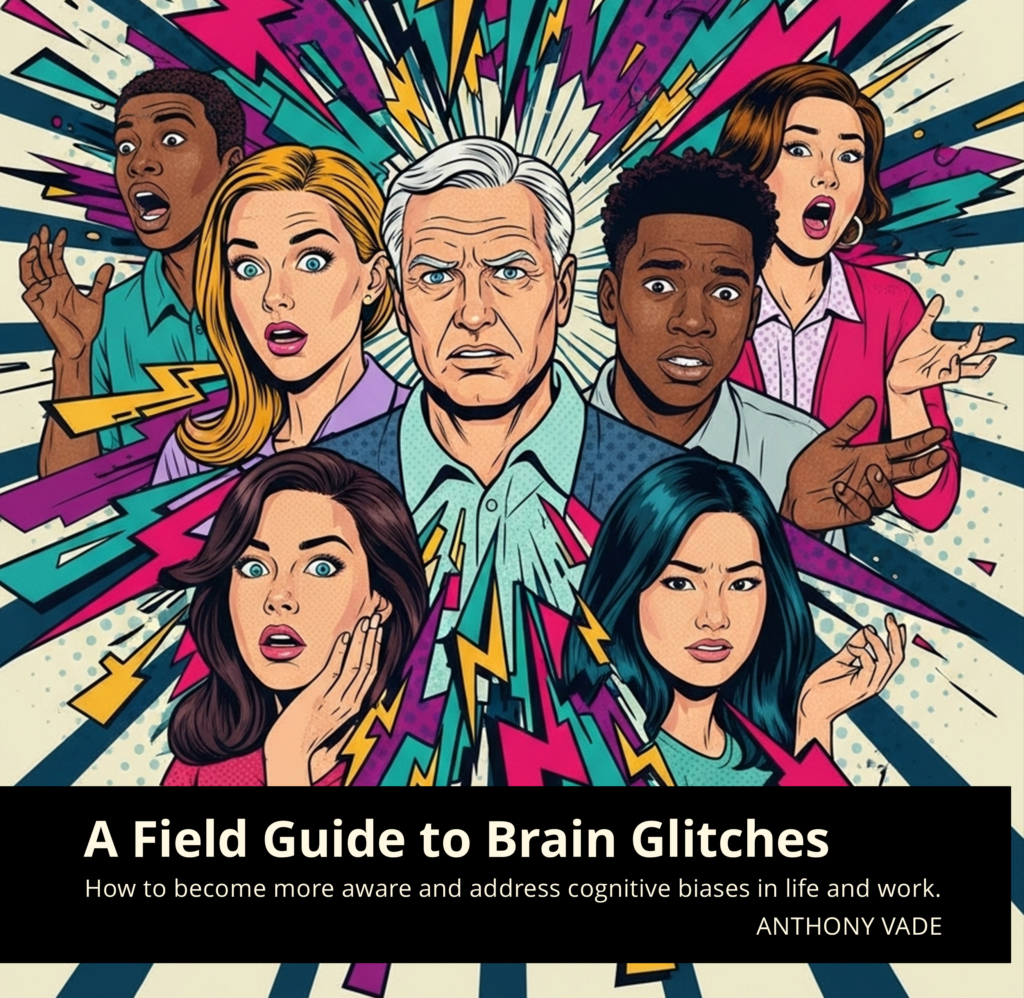
A Field Guide to Brain Glitches. by Anthony Vade
Navigate the complexities of choice and leadership with The Field Guide Series, a comprehensive collection designed to sharpen your thinking, from the psychology of the mind to the strategy of the boardroom. Each guide provides a unique lens on the critical art of decision-making, equipping you with the awareness, process, and tools to act with clarity and confidence.
A Field Guide to Brain Glitches lays the essential foundation, revealing the “why” behind our flawed judgments. It serves as a diagnostic manual to the universal cognitive biases hardwired into our brains, explaining how ancient mental shortcuts lead to predictable errors in the modern world. Through powerful cautionary tales, you will learn to identify the glitches that sabotage even the most successful organizations.
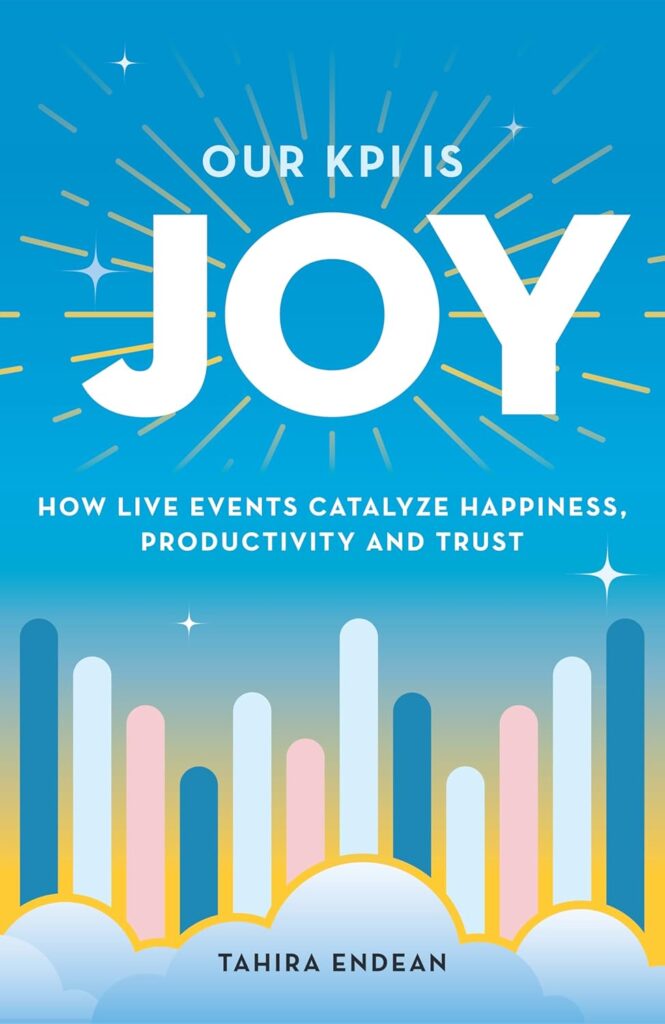
Our KPI Is Joy. by Tahira Endean
The event industry shifted as we returned from the pandemic, and the world continues to shift all around us. Our world is dominated by technology, AI is front and center, and more than ever, we need human connection. Events are the key tool to bring people together to immerse themselves in experiences, engage in dialogue, build trust, collaborate, prototype, innovate, and yes, find joy. Tahira’s second book explores how you can use your events as the most potent catalyst available to us today for change and growth, personally and in growing our organizations.
Connect with you online and don’t forget to get your seat at the Strategy Table…